Roofing Decisions · Northern Virginia
How to Choose a Roofing Contractor in Northern Virginia
A roof replacement is not a purchase you want to make twice. Here's how to evaluate licensing, compare scopes instead of just prices, and choose a contractor who takes responsibility for the entire job.
Published September 8, 2026 · Northern Virginia
Treat Roofing as a Building-Envelope Project
A roof replacement is not a purchase you want to make twice. In Northern Virginia, a contractor's work must stand up to summer heat, wind-driven rain, winter freeze-thaw cycles, mature tree coverage, and the expectations of homeowners' associations and local jurisdictions. Knowing how to choose a roofing contractor in Northern Virginia means looking beyond a low estimate and evaluating who will take responsibility for the entire job.
The right contractor should make the process more controlled, not more confusing. That starts with clear qualifications, a complete scope of work, realistic scheduling, and a written commitment to protect your property while the work is underway.
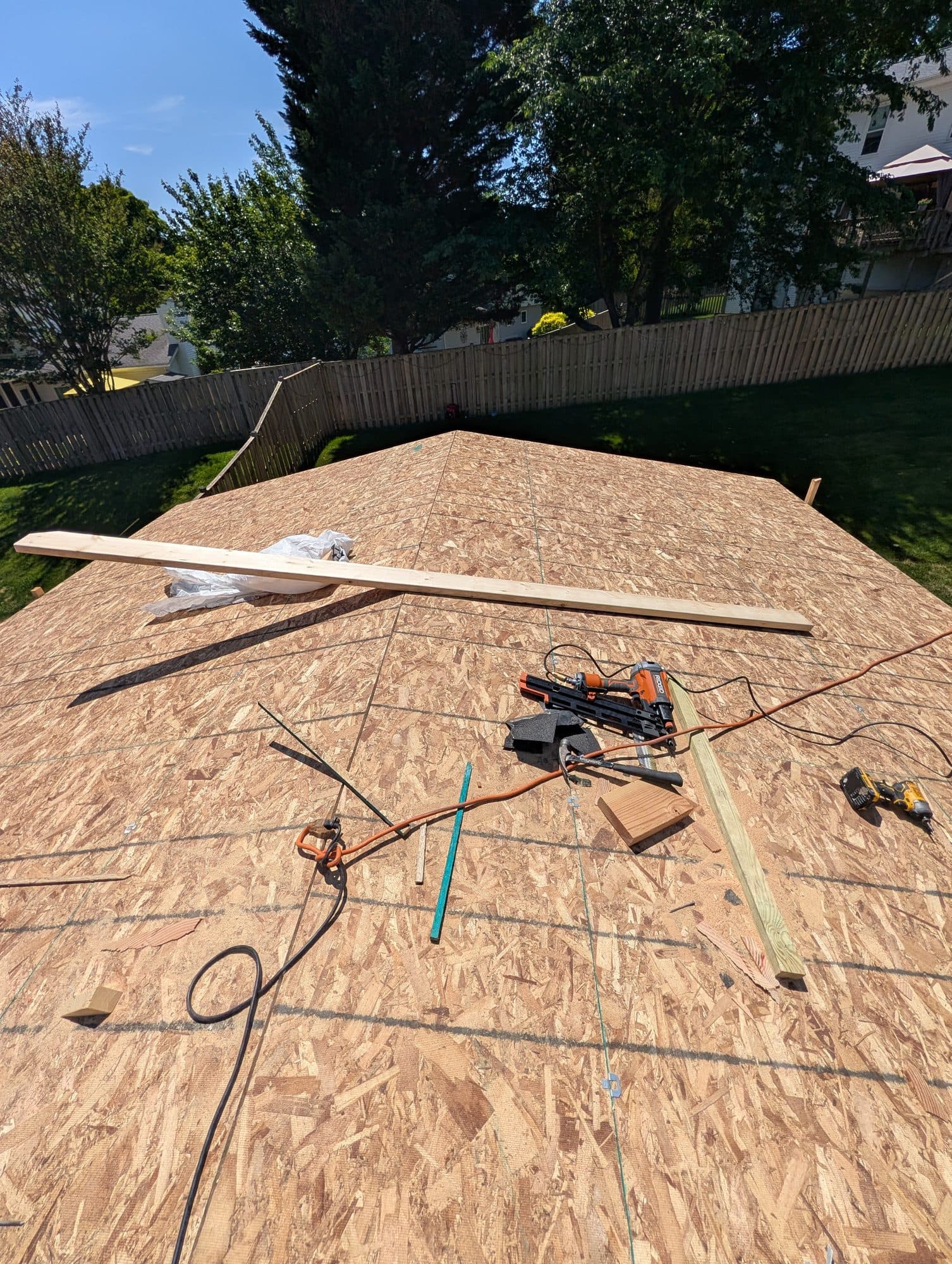
Start by treating roofing as a building-envelope project, not simply a shingle installation. Your roof works with flashing, ventilation, gutters, siding transitions, attic conditions, and drainage to keep water out of the structure. A contractor who only talks about shingle color and price may be overlooking the details that determine whether the roof performs over time.
Ask each prospective contractor to inspect the roof in person. A legitimate assessment should account for visible damage, roof age, slope, penetrations, flashing conditions, ventilation, deck condition where it can be evaluated, and signs of water intrusion. Be cautious with contractors who offer a firm price based only on satellite images, a few photos, or a quick drive-by. Those tools can be useful for preliminary measurements, but they do not replace an on-site evaluation.
Confirm Virginia Licensing and Insurance
A contractor should be able to provide current Virginia contractor licensing information, proof of general liability insurance, and workers' compensation coverage when applicable. Verify the license independently through the appropriate Virginia state database rather than relying only on a number printed on a proposal.
This step protects more than the roofing work itself. If an uninsured worker is injured on your property or a contractor damages your siding, landscaping, windows, or neighboring property, the financial and legal consequences can become complicated quickly. A professional contractor expects these questions and provides documentation without resistance.
Also ask who will actually perform the work. Some companies sell the project and hand it entirely to a subcontracted crew with little ongoing oversight. Subcontractors are common in construction, but the key question is accountability. Find out who will supervise the jobsite, inspect critical details, coordinate material delivery, and serve as your point of contact if an issue arises.
Compare Scopes, Not Just Bottom-Line Prices
Two roofing estimates can differ by thousands of dollars while appearing to cover the same job. Often, the difference is not simply markup. It is what has been included, excluded, assumed, or left unclear.
A useful proposal identifies the roofing system and the work required to install it properly. It should specify the manufacturer and product line, shingle type and color, underlayment, ice and water protection where needed, starter materials, ridge caps, flashing work, ventilation components, and debris removal — see the materials and brands we install for an example of that level of detail. It should also address how the contractor will handle damaged roof decking if it is discovered after tear-off.
Do not accept vague language such as "replace roof as needed" without a clear explanation. Roofing work frequently reveals concealed conditions. The problem is not that additional repairs may be necessary. The problem is when the contractor has not explained how those repairs will be documented, priced, and approved.
- The exact roofing materials, including underlayment, flashing, ventilation, and accessory products
- The number of existing roof layers to be removed and how concealed damage will be handled
- Protection for landscaping, driveways, siding, windows, decks, and outdoor equipment
- Cleanup expectations, including magnetic nail sweeps and disposal of old roofing materials
- The workmanship warranty, manufacturer warranty eligibility, and any exclusions
Ask How They Handle Ventilation and Flashing
Most roof leaks do not begin in the middle of a shingle field. They often occur at transitions and penetrations: chimneys, walls, skylights, plumbing vents, valleys, dormers, and step flashing along siding. These areas require careful material sequencing and skilled installation.
Ask the contractor how they assess flashing conditions and whether existing flashing will be reused or replaced. Reusing sound flashing may be appropriate in some situations, but it depends on its condition, the roof design, and the manufacturer's requirements. A contractor should explain the recommendation rather than treating every roof the same.
Ventilation deserves the same attention. Poor attic ventilation can contribute to excessive heat, moisture buildup, shortened shingle life, and uneven roof performance. The correct approach depends on the home's attic layout, insulation, intake ventilation, and exhaust ventilation. Be wary of a one-size-fits-all solution or promises that a new ridge vent alone will solve every attic issue. Roofing Roughnecks addresses flashing and ventilation as part of every full roof replacement and roof repair we scope.
Evaluate Local Experience and Project Management
Northern Virginia roofs come with practical site constraints. Many homes sit on narrow lots, have established landscaping, share driveways, or are governed by HOA exterior standards. Townhomes and attached properties can add questions about shared walls, access, drainage, and coordination with neighbors. We coordinate these logistics across our Northern Virginia service area, including HOA communities and townhome developments.
Choose a contractor who can explain how the project will be organized before materials arrive. That includes delivery location, dumpster or trailer placement, access for the crew, protection of outdoor areas, daily cleanup, weather planning, and the expected start-to-finish schedule. A roof replacement can move quickly under good conditions, but weather, hidden damage, complex rooflines, and material availability can affect timing. A reliable contractor gives you a realistic plan instead of an unrealistic promise.
Ask for recent local references that are comparable to your property. A contractor experienced with detached homes may still be qualified for a townhome, but the logistics and responsibility can differ. For commercial buildings, ask specifically about experience with the roof type, drainage configuration, occupied-building safety, and coordination around business operations.
Online reviews can be helpful, particularly when they describe communication, cleanup, problem resolution, and warranty response. Still, reviews should support your evaluation, not replace it. A contractor's written scope, credentials, references, and responsiveness during the estimating process are more meaningful indicators of how the project will be managed.
Review the Contract Before Signing
A roofing contract should be detailed enough that both parties understand the work without relying on verbal assurances. It should identify the property, scope, materials, contract price, payment schedule, anticipated timeline, change-order process, warranty information, and responsibilities for permits or HOA documentation when required.
Pay close attention to the payment schedule. A reasonable deposit may be appropriate, particularly when materials must be ordered, but avoid arrangements that require most or all of the project cost before meaningful work is completed. Payment terms should align with materials, progress, inspections, and final completion.
Make sure the contract states how changes will be approved. If rotten decking, chimney issues, or other concealed conditions are found, you should receive an explanation and documented cost before extra work proceeds whenever circumstances allow. Clear change management prevents a necessary repair from turning into an avoidable dispute.
Watch for Sales Pressure and Unclear Promises
After a storm, Northern Virginia property owners may see an influx of contractors offering immediate inspections, insurance assistance, and limited-time pricing. Storm damage claims can be legitimate, but urgency should not force a rushed decision.
Be cautious if a salesperson discourages you from getting another estimate, demands an immediate signature, offers to absorb your insurance deductible, or cannot provide a local business address and verifiable credentials. A contractor can assist by documenting visible damage and explaining the repair scope, but should not make guarantees about what an insurer will approve.
The same caution applies to broad lifetime promises. Material warranties and workmanship warranties are different. Ask who stands behind each one, what maintenance or registration may be required, what events are excluded, and how warranty service is requested. A warranty has value only when the responsible party remains available and willing to respond.
Choose the Contractor Who Owns the Outcome
The best roofing contractor is not necessarily the company with the slickest presentation or the fastest estimate. It is the one that can clearly define the work, coordinate the details, protect your property, communicate when conditions change, and stand behind the completed roof.
For property owners, that level of accountability reduces risk before construction starts and prevents small installation decisions from becoming long-term problems. Kenney Construction approaches building work with that same discipline: clear scope, capable oversight, quality execution, and responsibility for the finished result.
A roof should give you confidence when the forecast turns. Choose a contractor whose process gives you that same confidence before the first shingle is removed.
Frequently Asked Questions
What's the most important thing to check before hiring a roofing contractor in Northern Virginia?
Start with an in-person inspection rather than a satellite-image quote, and confirm Virginia contractor licensing, general liability insurance, and workers' compensation independently rather than trusting a number printed on a proposal.
Why do roofing estimates for the same job vary so much?
The difference is usually scope, not just markup — what materials, flashing work, ventilation components, layer removal, protection, and cleanup are actually included versus left vague or excluded.
Does a roof replacement always need new flashing?
Not necessarily. Whether flashing is reused or replaced depends on its condition, the roof design, and the manufacturer's requirements — a contractor should explain the recommendation rather than treating every roof the same.
Should I sign with the first contractor who inspects storm damage?
No. Storm damage claims can be legitimate, but urgency from a salesperson — an immediate signature, an offer to absorb your deductible, no local address — is a reason to slow down and get another estimate.
Does Roofing Roughnecks serve all of Northern Virginia?
Yes. Roofing Roughnecks is Kenney Construction's roofing division, serving Herndon, Reston, and the surrounding Northern Virginia service area with roof replacement, roof repair, and storm-related roofing.
Related Planning Resources
Get a Written, Complete Roofing Scope
Request an in-person inspection and a proposal that names the materials, flashing work, and protection for your property — not just a price.
Request a Roofing Estimate